
Pulaski Arrests Across a Date Range
Pulaski County's broader booking blotter lives on the official “Inmates By Arrest Date” page. It runs on the same vendor system as Current Inmates and the 24 Hours Arrests page. The purpose differs, though. You set a start date and an end date. Wide ranges can span several results pages.
Calling it a weekly arrest log describes a search habit, not a county promise. Pulaski County publishes no rule on archive depth, posting deadlines, or refresh timing. Entries can be corrected after the fact. A blank result may mean the dates were off, the portal lagged, or entry was delayed. You control the window.
Multi-day advantage: A released booking stays in the arrest-date results after it drops off the current roster. That makes this view the better pick for looking back at past Pulaski County arrests.
The official arrest-date search is documented in this captured interface.
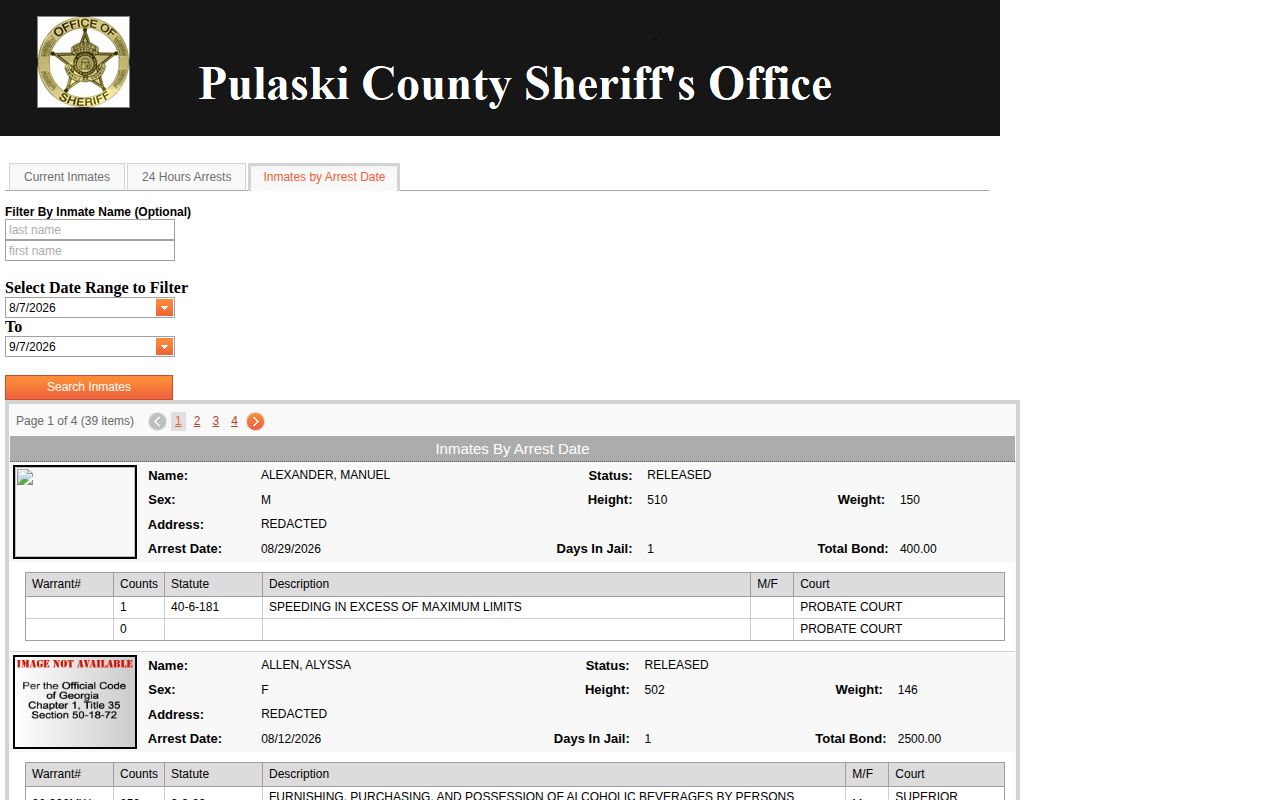
The date filter reaches further than a same-day feed.
Read the Pulaski County Blotter
Start from a known event date. A tight range keeps separate booking events distinct and lowers the odds of matching the wrong person in a Pulaski County arrest record.
- Open Inmates By Arrest Date from the official Pulaski jail portal.
- Enter From and To dates that cover the likely arrest period, including the prior evening when timing is uncertain.
- Submit the range and review every results page. Do not stop after the first paginated screen.
- Compare name, arrest date, agency, status, warrant number, counts, statute, description, court, and bond fields.
- Note whether the portal says “CURRENTLY BOOKED” or “RELEASED.” Neither label states the outcome of the criminal case.
- Use the relevant court or clerk for a disposition, and the custodian for a source record no longer visible online.
Suspect the arrest happened hours ago? The Daily Arrest Report fits better. The weekly log will not prove the portal has finished processing a fresh booking.
What Pulaski Arrest-Log Rows Mean
Rows here carry the same labels as the live roster. Status matters most. The date view can return released bookings, so read the portal's wording literally and add nothing it does not state.
| Field or control | Careful interpretation |
|---|---|
| From and To | The user-selected arrest-date span, not a publication or court-date range. |
| Name | The displayed booking name; verify identity beyond a similar spelling. |
| Status | “CURRENTLY BOOKED” or “RELEASED” as the vendor marked that entry. |
| Arrest date and agency | The recorded event date and credited arresting agency. |
| Warrant number and counts | Identifiers and count fields associated with the booking row, not proof a warrant remains active. |
| Statute and description | Charges as entered at booking, subject to later amendment or dismissal. |
| Court and total bond | Routing and bond fields, not a court outcome or evidence of payment. |
| Image control | A portal option that does not guarantee a public photograph for every row. |
More fields can appear. Days in jail is a duration, not a sentence. Sex, height, weight, and a redacted address often show too, so respect the redactions and never pair a booking row with personal details from unrelated sources.
Weekend Arrests Without Guesswork
Weekends and holidays are where the date filter earns its keep. One query can cover several calendar days. No data shows a weekend arrest surge here. The county posts no Monday batching rule. The smart move is simply to widen the range.
Posting date and arrest date are different things. The portal may display a booking after processing finishes. A news story can lag further behind. If Friday night timing is fuzzy, include the adjoining dates and confirm current custody by phone. A missing row never proves no arrest happened.
The current roster shows who is booked now. The date log shows which records a date search returns. A court docket shows what happened in a case. Keeping those straight stops a released status from looking like a dismissal, or a bond field from reading as a final result.
Pulaski Booking Records Beyond the Portal
Showing online is not the same as being kept by the government. Georgia sets the rules in its Archives schedules. Jail booking records fall under LG-19-060. They are kept ten years after release. Jail registers sit under LG-19-061, also ten years after the last entry, while investigation logs under LG-19-059 run three years after release.
Nothing in that schedule promises a Pulaski booking photo lasts the full ten years. A photo may sit inside a booking record. Ask the custodian which record class applies. When an old row is missing, ask whether the jail register, booking record, booking photograph, release record, or vendor extract still exists, or whether part of it was lawfully destroyed.
A narrow open-records request beats a blanket one. Give a date range, a name, the arresting agency if known, and the record classes you want. Georgia's Open Records Act is O.C.G.A. § 50-18-70 et seq. State guidance favors written requests. An agency withholding material should name the exemption, and Pulaski County publishes no separate sheriff records-line fee schedule.
Need archival help? The Georgia Archives research-services page explains how to ask about archival holdings. That is the place to check for transferred records.
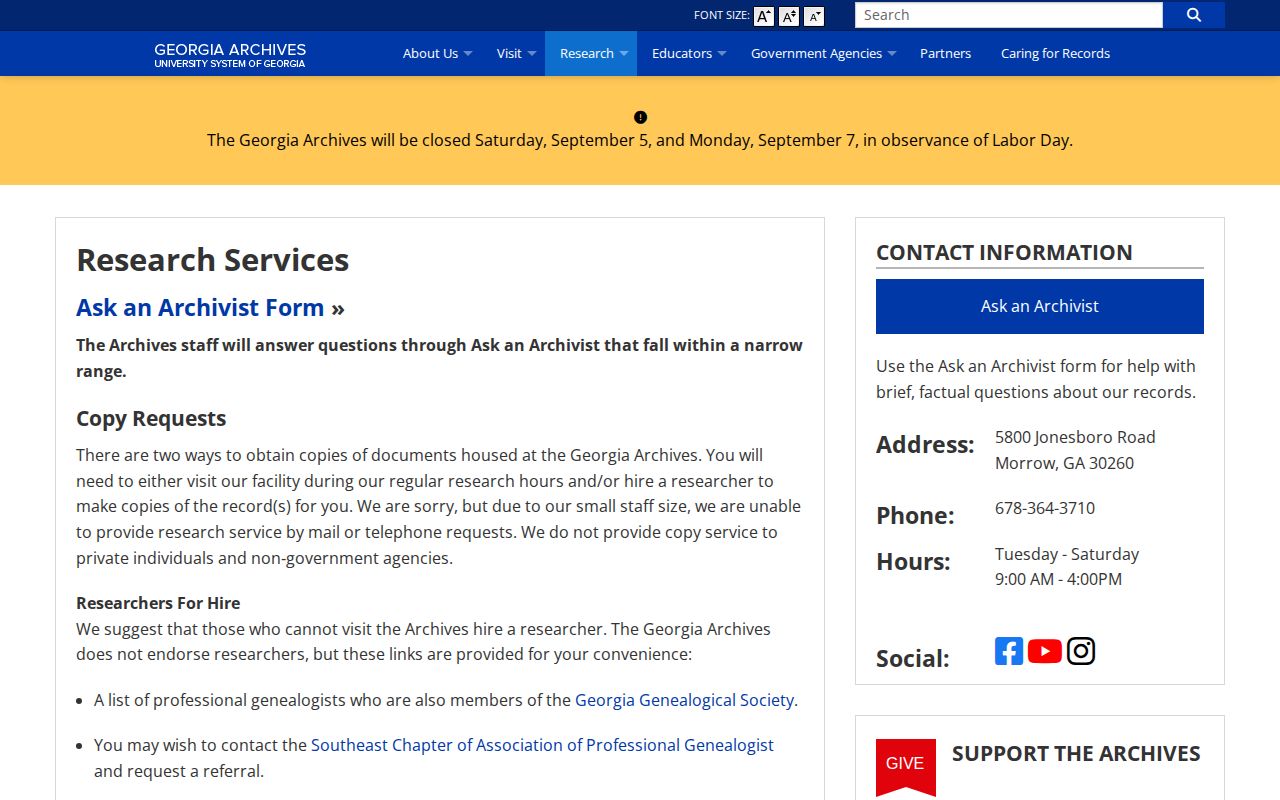
Archives can flag holdings that moved. No sign points to Pulaski's live portal records sitting there.
Pulaski Arrest News Is Not a Roster
41NBC's Pulaski tag is the best local index for arrest news in the county. It is event-driven. One story covered a Hawkinsville hotel kidnapping arrest. It came after a welfare check. Another gave a GBI shooting investigation update. A wanted-person report and a GSP DUI arrest filled out the coverage. Each story adds agency statements and context. Together they still fall short of a weekly arrest list. Treat news photos carefully. A story may run a press image, an agency photo, or a social post. It may also use a file picture. Only the publisher or an official source can confirm a booking photograph. The 41NBC Hawkinsville GBI update is a good example of case-specific regional reporting.
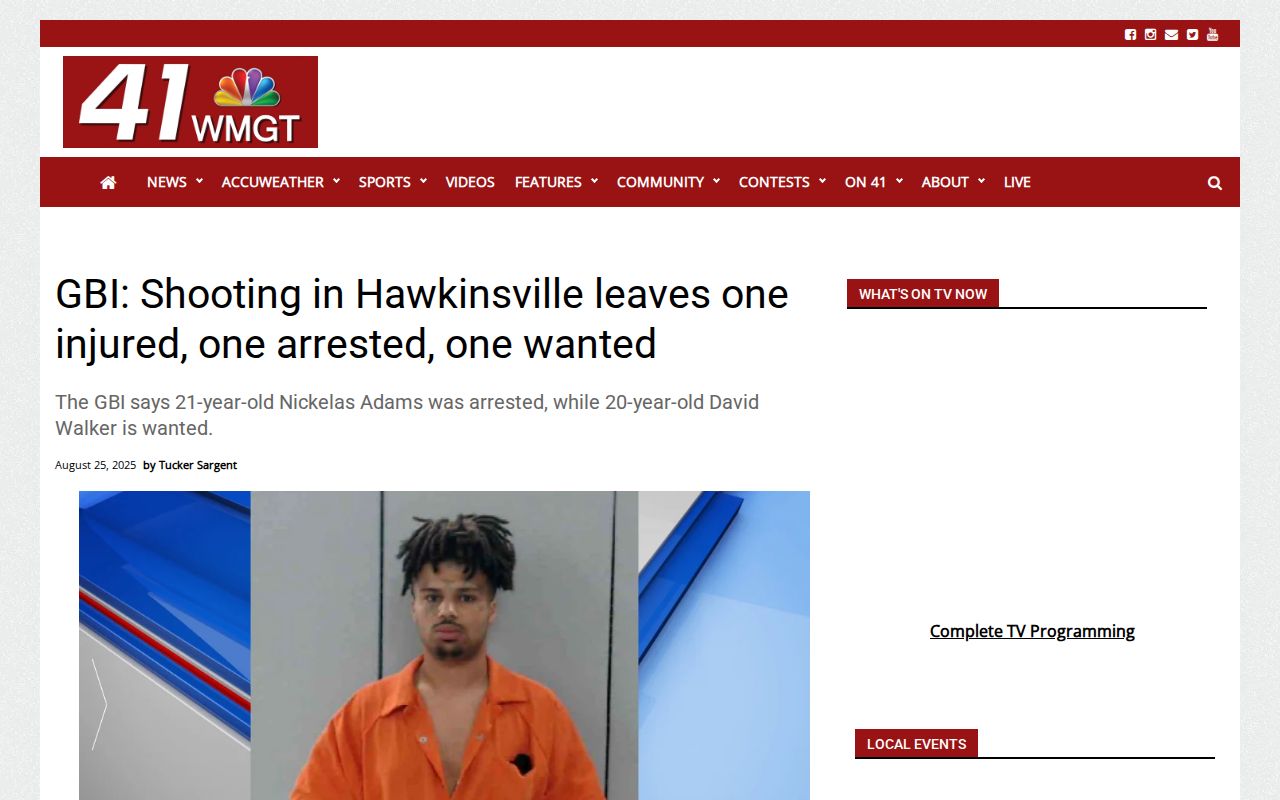
The narrative is only context. The jail portal and the court remain the sources for custody and Pulaski County case outcomes.
Hawkinsville's Older Record Trail
The Hawkinsville Dispatch and News works better as an archival lead than a live blotter. UGA's catalog calls it a weekly legal organ. Its microfilm holdings span 1890–91, 1893–1947, 1949–90, and 1996–2012. Georgia Historic Newspapers adds older Dispatch material plus merger context. Neither is a current online arrest feed.
Old news can pin down a date, an event, or a court name. Cross-check with the record custodian. Court files sit apart from jail records. Georgia Courts eAccess lists Pulaski Superior Court. The local Superior Court page names Clerk Michael King at 141 Commerce Street, (478) 783-1911. A booking number may not match the court's case number.
The Criminal Case Data Exchange dashboard refreshes every 60 days and counts transmitted disposition data by OTN. It gives system context only. It is not an individual Pulaski arrest lookup.
Released Arrest Entries and Court Outcomes
A “RELEASED” label tells you one thing only: the portal has closed that booking entry. It says nothing about timing or the reason. The same goes for “CURRENTLY BOOKED.” That status shows who is in custody at the jail right now. It does not show how any case stands. Charges listed at booking can change as a Pulaski County case moves forward. Courts may amend, reduce, or dismiss them.
To learn how a case actually ended, go through the clerk or the court-access route. Municipal matters run through Hawkinsville Municipal Court procedures. Magistrate Court handles its own jurisdiction. Its published $20 warrant pre-application fee covers paperwork only, not a warrant search.
About the log: The weekly arrest log tracks Pulaski County booking events and arrest entries. Released arrestees stay listed with their booking details.
The portal offers no booking-photo gallery. Its image settings are managed on the source side, and Pulaski County sets no published rule guaranteeing that mugshots stay available. Third-party jail guides carry no official weight, so treat the portal, the Sheriff's Office, and the courts as the authorities on any arrest record.
Public Record Search
Sponsored Results